;fill-rule:nonzero;stroke:%23000;stroke-width:48.7px;'/%3e%3cdefs%3e%3clinearGradient%20id='_Linear1'%20x1='0'%20y1='0'%20x2='1'%20y2='0'%20gradientUnits='userSpaceOnUse'%20gradientTransform='matrix(2406.25,-2101.13,2101.13,2406.25,1086.43,2157.14)'%3e%3cstop%20offset='0'%20style='stop-color:%232d1f30;stop-opacity:1'/%3e%3cstop%20offset='1'%20style='stop-color:%239f5060;stop-opacity:1'/%3e%3c/linearGradient%3e%3c/defs%3e%3c/svg%3e)

What makes a device "smart"?
2026-02-07
To keep things simple, let's define a "smart device" as supporting at least one of these behaviours:
- Receives commands digitally
- The device receives instructions from a remote user or system, communicated over a digital network. Smart blinds can be opened and closed remotely, but may not know how "open" the blinds are.
- Transmits state digitally
-
The device communicates its internal state (eg. activity, sensors, battery level) over a
digital network, in real-time. A contact sensor is a good example (as seen in
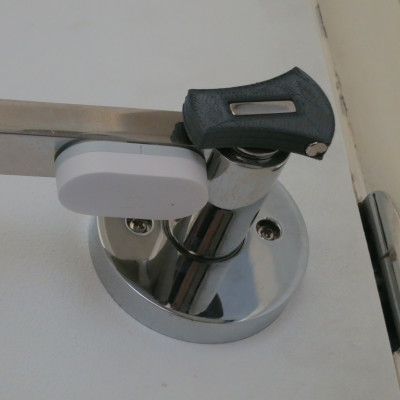 Door lock)
- Acts independently
- The device can be configured to execute tasks, triggered by built-in timers and sensors. A garden watering system may support preconfigured, timed activation.
Off-the-shelf smart devices are designed and built to support these behaviours, but we can augment basic devices to support these behaviours too, often without making any changes to the devices themselves.
If you have feedback or questions about this article, let's catch up via email.

 All articles
 About Sinclair Studios